Paulina Jaramillo
Trustee Professor, Engineering and Public Policy
Courtesy Appointment, Civil and Environmental Engineering, CMU-Africa
Trustee Professor, Engineering and Public Policy
Courtesy Appointment, Civil and Environmental Engineering, CMU-Africa
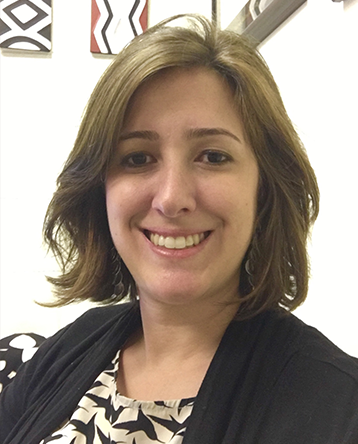
Originally from Medellin - Colombia, Paulina Jaramillo is a naturalized citizen of the U.S., where she has lived more than half her life. She is currently a professor of engineering and public policy at Carnegie Mellon University (CMU). Jaramillo is also a fellow of the Scott Institute for Energy Innovation and Research at CMU and a research affiliate of the Kigali Collaborative Research Center. She also holds a courtesy appointment in CMU Africa. Finally, Jaramillo is a lead author for the IPCC’s 6th Assessment Report as part of Working Group III.
Jaramillo’s past research focused on life cycle assessment of energy systems with an emphasis on climate change impacts and mitigation research. As a professor at CMU, she is currently involved in multi-disciplinary research projects to better understand the social, economic, and environmental implications of policy-driven changes in the operations of the energy system. Over the past five years, her research and education efforts have expanded to include issues related to energy access and development in the Global South. She has also worked to incorporate values and beliefs in energy planning in historically disenfranchised communities and to understand the implications of energy access in gender equity.
Jaramillo’s interest in energy for the Global South stems from her firm belief that what happens in developing countries as they try to provide energy that supports development will have profound implications in global environmental systems. There is an opportunity, however, to build sustainable and equitable modern energy systems that benefit from decades of technological development and experience elsewhere while accounting for local conditions and stakeholder interests. Through her research, Jaramillo aims to create the knowledge that will be required to meet global energy needs and climate mitigation efforts.
2007 Ph.D., Civil and Environmental Engineering, Carnegie Mellon University
2004 MS, Civil and Environmental Engineering, Carnegie Mellon University
2003 BS, Civil and Environmental Engineering, Florida International University
Wilton E. Scott Institute for Energy Innovation
With support from the Scott Institute’s 2025 hardware and software tool upgrade program, the Open Energy Outlook team updated the mathematical model Temoa’s framework to portray how growing energy demands — particularly from data centers and cryptocurrency mining — could affect electricity costs in the U.S.
Wilton E. Scott Institute for Energy Innovation
This year, a total of seven projects received seed funding, with another three proposals receiving support through the hardware and software tool upgrade program.
WomenTech Network
EPP’s Paulina Jaramillo was named one of “30 Trailblazing Hispanic Women Shaping the Future of Tech” by WomenTech Network.
AP News
EPP’s Paulina Jaramillo was quoted about the NAS’ response to efforts by the Trump administration’s EPA to roll back more than a decade of regulations aimed at fighting climate change.
Carnegie Mellon University Africa
Three CMU Engineering and Public Policy students spent part of their summer conducting research at CMU-Africa. They collaborated with educators and stakeholders there to integrate their research with the needs and expertise of the local community, and to strengthen ties between students in Pittsburgh and Kigali.
CMU Engineering
EPP Professor Paulina Jaramillo is honing her policy outreach skills by participating in prestigious fellowship programs.
Engineering and Public Policy
Engineering and Public Policy Professor Paulina Jaramillo completed the ELATES at Drexel fellowship—a national leadership development program for women in STEM fields in academia.
Heatmap
EPP’s Paulina Jaramillo spoke with Heatmap about the current rules surrounding hydrogen production in the U.S.
Public Source
EPP’s Paulina Jaramillo spoke with Public Source about how natural gas is not the solution to the climate crisis. Jaramillo claims that “getting rid of coal and reducing all your other fossil fuel combustion,” is what is necessary to effectively decarbonize.
Wilton E. Scott Institute for Energy Innovation News
MSE’s Chris Pistorius and EPP’s Valerie Karplus and Paulina Jaramillo, alongside Assistant Professor of Economics and Public Policy Edson Severnini, joined collaborators in Germany to begin an international research partnership.
Wilton E. Scott Institute for Energy Innovation
Valerie Karplus and Paulina Jaramillo, Scott Institute Energy Fellows, and Chris Pistorius and Edson Severnini, Scott Institute Faculty Affiliates, joined international collaborators in Heidelberg, Germany, in early May to kick off a research partnership focused on industrial decarbonization.
Wilton E. Scott Institute for Energy Innovation
The Wilton E. Scott Institute for Energy Innovation’s Seed Grants for Energy Research program will support three research projects in the 2023 cycle.