Hatem Haddad joins CMU-Africa
Gwyneth Bessey
Oct 9, 2026
Carnegie Mellon University Africa welcomes Hatem Haddad as associate teaching professor, supporting instruction and research in data structures, algorithms for engineering, natural language processing, and artificial intelligence system design. He joined the faculty on September 1.
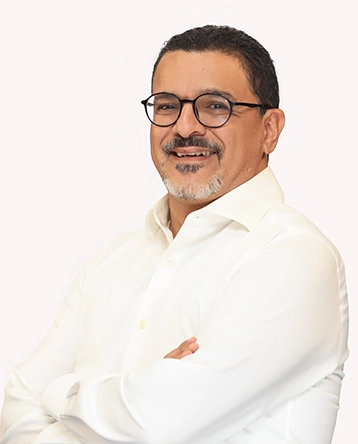
Haddad began his engineering education in Tunisia before pursuing his master’s and Ph.D. at Grenoble Alpes University in France. He then completed post-doctoral research programs in Finland and Norway, and has held academic, consultancy, and leadership roles across Dubai, Singapore, Tunisia, Turkey, and Belgium, including serving as CTO of several AI technology ventures and advising organizations as an AI consultant.
Haddad’s research focuses primarily on natural language processing, speech recognition, and deep learning. His work emphasizes low-resource languages and dialectal processing, including the creation of specialized pretrained language models of under-resourced languages, dialectal speech recognition systems, and datasets for under-resourced African and dialectal Arabic languages. He also applies AI to optimize energy management systems, reduce operational costs, and minimize computational footprints for applications such as non-intrusive load monitoring (NILM), smart grids, and preventive maintenance. Haddad serves as program chair for various conferences in the AI field and as an associate editor for ACM Transactions on Asian and Low-Resource Language Information Processing.
In addition to his broader research contributions, Haddad served as publications chair for the Deep Learning Indaba and has helped foster natural language processing research across the continent through community-led initiatives such as the Masakhane Research Foundation, supporting efforts to strengthen Africa's representation in global language technology. Through his engagement with the Deep Learning Indaba as the chair of the publications committee, Haddad previously collaborated with CMU-Africa, where he was amazed by the quality of the students’ research and particularly impressed by the papers from CMU-Africa students accepted for publication during the conference.
Driven by a shared mission, he has found CMU-Africa students to be deeply committed to pioneering impactful AI solutions centered on their native languages and local contexts. Haddad is thrilled to leverage his expertise in natural language processing to empower students, turning their rich linguistic heritage and diverse regional experiences into transformative, real-world technologies both in the classroom and across the globe.